
In a world where attention is the rarest currency, we are raising a generation of kids who are constantly fighting an uphill battle against the "scroll." We see it every day: the digital era has brought us incredible tools, but it’s also chipped away at our ability to focus on the small stuff. To see the details. To hear the nuance.
As parents, we’re always looking for that "leg up." We want to give our kids the best possible start, not just so they can get good grades or land a job, but so they can lead meaningful, successful, and happy lives.
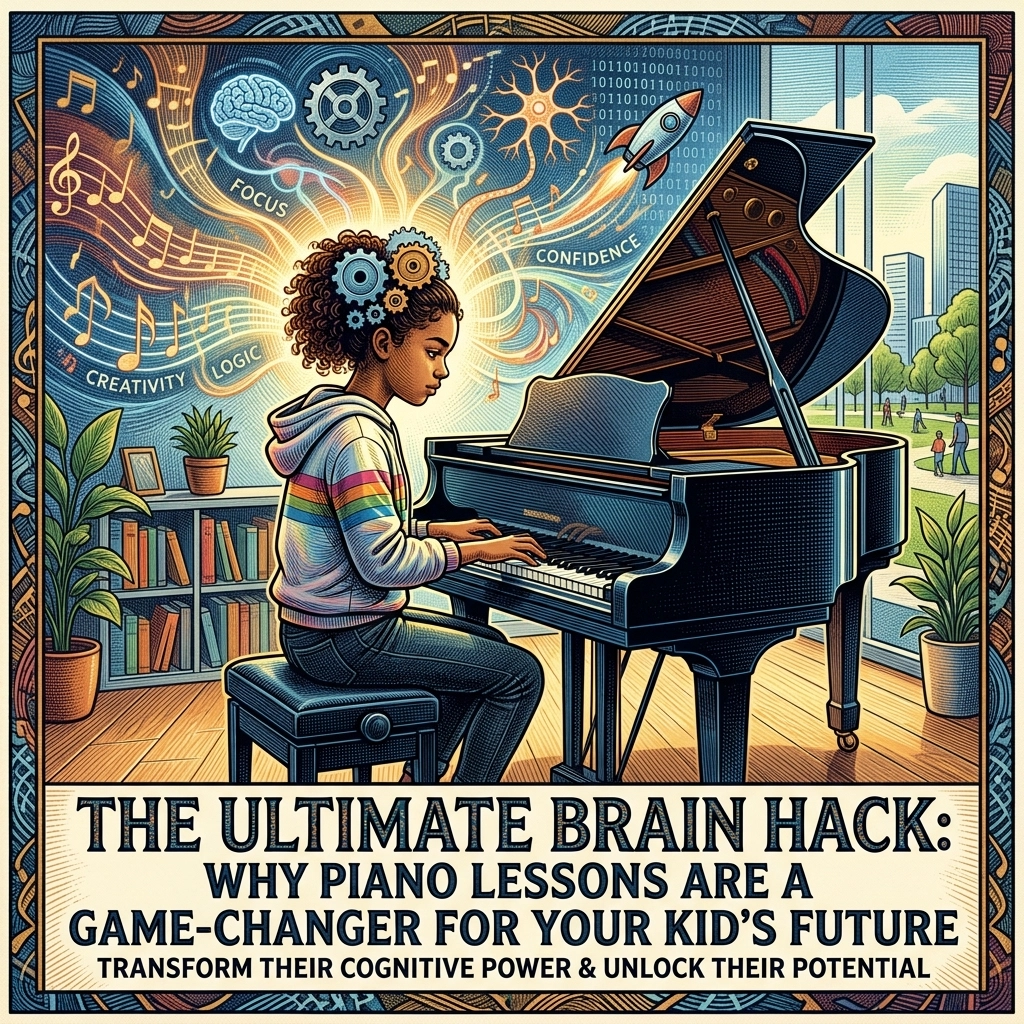
What if I told you the most powerful "brain hack" available isn't a new app or a coding camp, but an 88-key instrument that’s been around for centuries? At AM Music Academy, we don't just teach kids how to hit the right notes; we provide an artisan education that reshapes the way their brains process the world.
The 10-Year Rule: More Than Just Scales
There’s a fascinating concept in the book Brain Rules for Babies by John Medina. He suggests that if you want to give your child a genuine advantage in life, you should enroll them in music lessons for at least ten years.
Why ten years? Because that’s how long it takes for the brain to fully integrate the ability to hear emotional nuance.
When a child spends years learning the difference between a staccato (short, detached) note and a legato (smooth, connected) phrase, they aren't just learning music theory. They are training their ears and their brains to detect subtle shifts in tone, pitch, and rhythm.
In the real world, this translates to social intelligence. A child who can hear the "flatness" in a Mozart sonata is the same child who can hear the "flatness" in a friend's voice when they say, "I'm fine," but actually mean, "I'm having a really hard day." By learning to listen to the nuance in music, they learn to listen to the nuance in people. This builds empathy, helps them navigate complex social circles, and ultimately leads to a more connected, happier life.
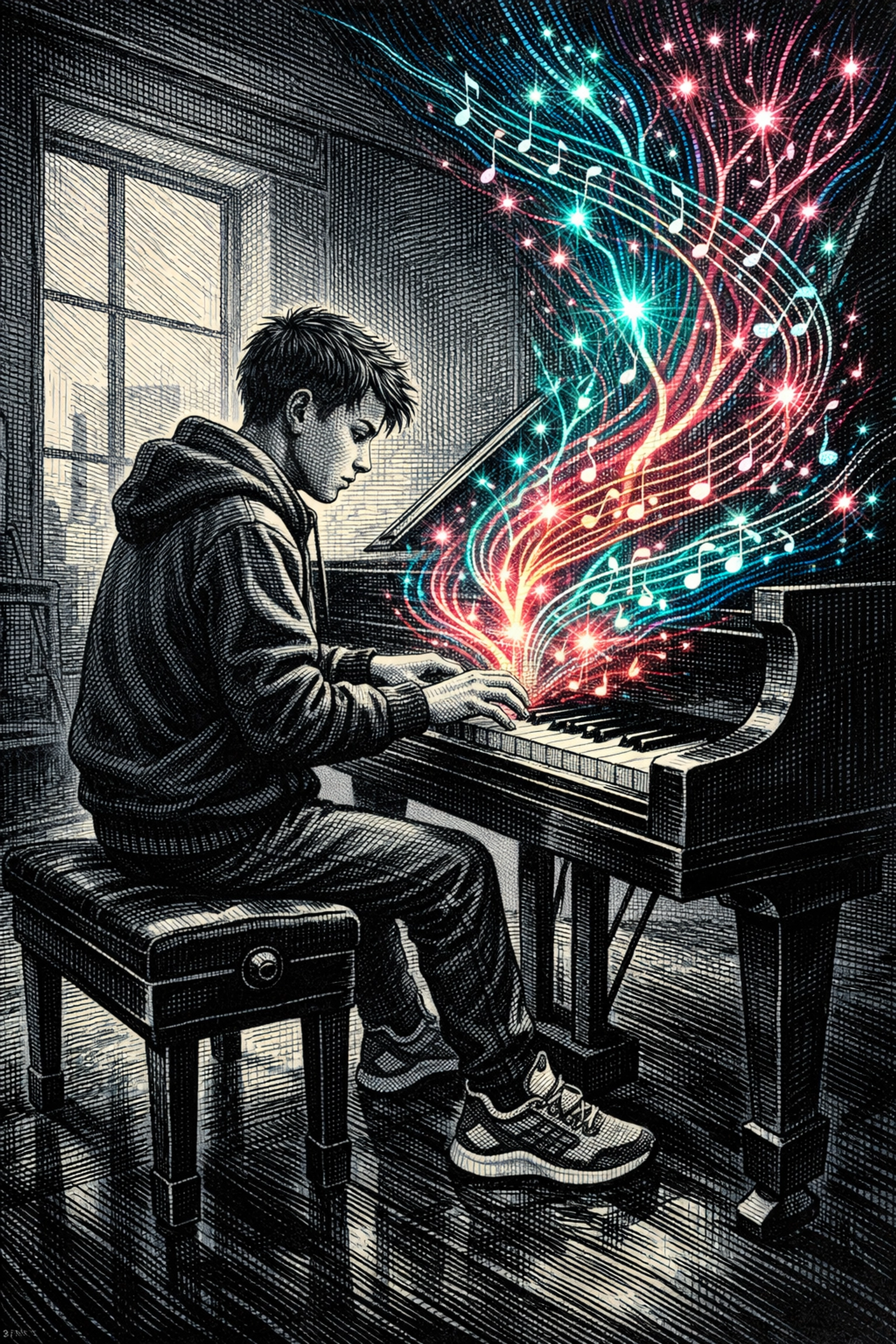
(Pattern Literacy visual from Sonny’s recent work.)
Training the "Focus Muscle" in a Digital Desert
We’ve all seen it: the "zombie stare" that happens after twenty minutes of mindless scrolling. The digital world is designed to provide instant gratification, which is the exact opposite of what the human brain needs to develop deep focus.
Piano lessons for kids are the ultimate antidote. You can’t "swipe" your way through a Chopin Nocturne. You can’t "fast-forward" through the process of mastering a difficult fingering pattern. It requires a level of sustained, intense focus that is becoming increasingly rare.
When a student sits down at one of our Kawai grand pianos, they are engaging in what scientists call "high-intensity exercise for the brain." They are:
- Reading complex notation (Language processing).
- Translating those symbols into physical movement (Motor skills).
- Coordinating both hands independently (Cross-hemisphere communication).
- Listening and adjusting in real-time (Feedback loops).
This kind of multi-sensory engagement builds neural plasticity. It strengthens the bridge between the left and right hemispheres of the brain. When you see a high-level performer today, what strikes you isn't just their talent: it's their clarity of focus. Their brains are tuned like a high-performance engine, capable of ignoring distractions and zeroing in on the task at hand.
The Artisan Difference: Custom Plans for Individual Minds
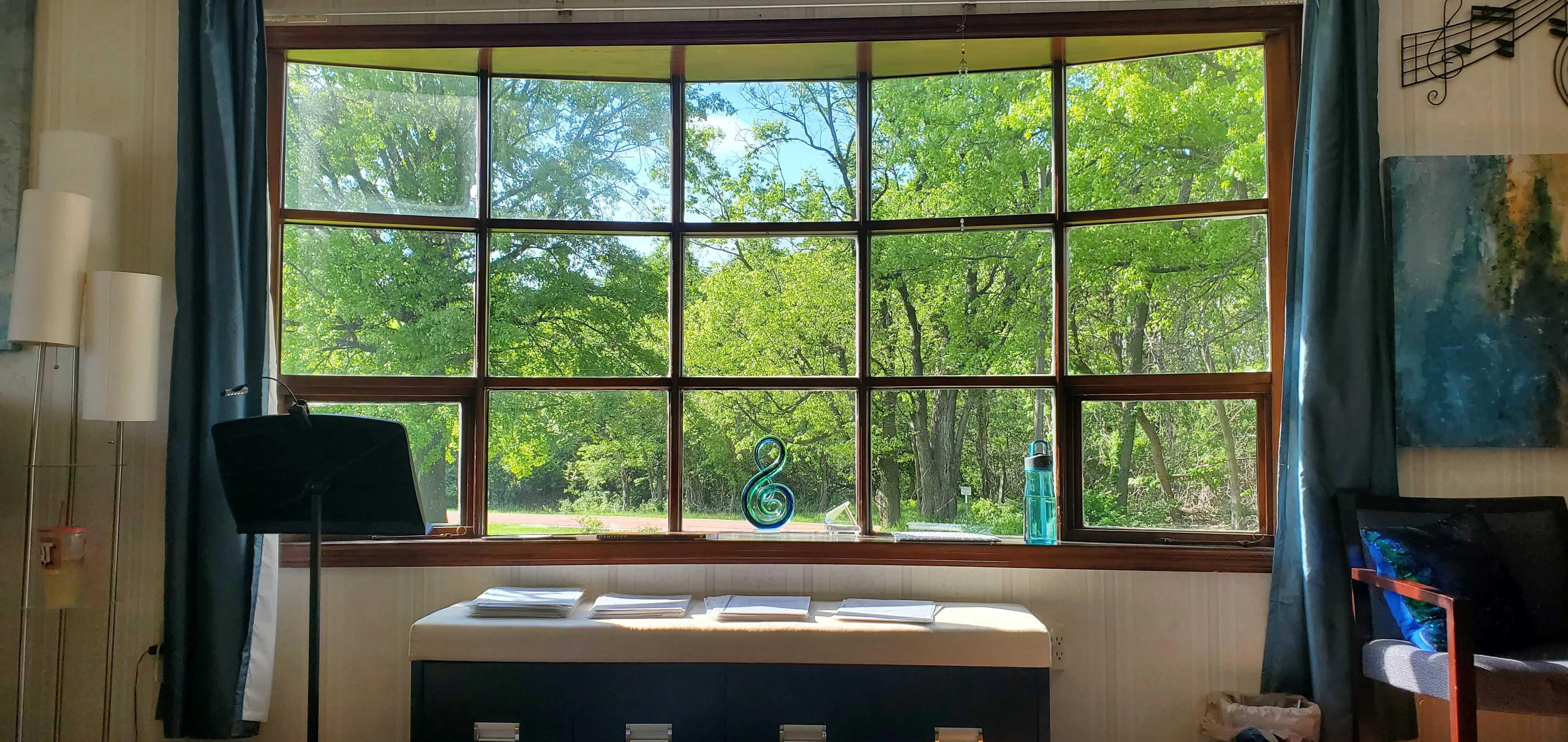
At AM Music Academy, we move away from the "factory model" of music education. We don't believe in one-size-fits-all lesson books or rigid, soul-crushing curricula. Instead, we offer a private music school in St. Louis experience that is deeply personalized.
Every kiddo who walks through our doors is a unique puzzle. Some are detail-oriented and love the technicality of theory. Others are soulful and want to play by ear. Our team of expert mentors, including masters like Angela Fisher, creates a custom plan for every single student.
We focus on artisan education. This means we treat the craft with the respect it deserves, but we tailor the journey to the child's starting point and long-term goals. Whether they want to become a concert pianist or just want the cognitive edge that comes with knowing how to play, we provide the mentorship to get them there.
Building the "Grit" for Real-World Success
Success in life is rarely about who is the "smartest" in the room; it's about who has the most grit. Piano teaches grit like nothing else.
There will be weeks where a specific measure of music feels impossible. The fingers won't move right, the rhythm feels clunky, and the student might want to quit. But then, through consistent practice and the supportive environment of our studio, they hit it. The "click" happens.
That moment of breakthrough is addictive. It teaches a child that struggle isn't a sign of failure: it's a sign of growth. This is the "competency edge." When they face a difficult math problem or a complex project at work twenty years from now, they won't panic. They’ll remember the piano. They’ll know that if they break the problem down, focus on the details, and put in the work, they can master it.
We've talked before about why muscle memory isn't enough; it’s about the deep intellectual understanding of the music. That’s the level of detail we strive for.
A Legacy of Success: Beyond the Bench
When you invest in piano lessons, you aren't just paying for a 30-minute block of time every week. You are investing in your child’s future self. You are giving them:
- Enhanced Academic Performance: Research consistently shows that music students perform better in math and language arts because of the overlapping cognitive skills.
- Emotional Regulation: Piano provides a healthy, creative outlet for stress and anxiety.
- Confidence: There is no substitute for the feeling of performing a piece of music you worked hard to master.
We see this transformation every day in our student reviews. It's not just about the music; it's about the person the music creates.
Ready to Give Your Child the Ultimate Brain Hack?
In the rush of the digital age, don't let your child miss out on the deep, nuanced training that only an instrument like the piano can provide. Whether you're looking for online music lessons or a traditional in-person experience at our St. Louis studio, we are here to help your child find their focus.
Setting your kid up for success starts with a single note. Let’s make sure it’s the right one.
Ready to start the journey? Sign up today or contact us to learn more about our artisan approach to music education. Let’s build a brighter, more focused future together( one key at a time.)
Leave a Reply
You must be logged in to post a comment.